

Posted by Editorial Team
on October 10, 2026

Table of Contents
- What Methylene Blue Without Pharmaceutical Additives Actually Means
- Methylene Blue Ingredients: Active vs. Inactive Components
- USP-Grade Methylene Blue vs. Industrial or Laboratory Grade
- How to Verify Purity and Check the Certificate of Analysis
- Methylene Blue Liquid vs. Capsules: Formulation Differences
- Methylene Blue Supplement Safety: Contamination Risks and Drug Interactions
- Choosing a Clean Methylene Blue Product: What to Check Before You Buy
- Frequently Asked Questions
Last Updated: October 10, 2026
What Methylene Blue Without Pharmaceutical Additives Actually Means
Methylene blue without pharmaceutical additives refers to formulations of this compound that exclude unnecessary fillers, binders, and preservatives commonly found in mass-produced supplements. When you're evaluating methylene blue without additives, you're looking for products that contain the active ingredient with minimal inactive components.
The distinction matters because additives can introduce contaminants, trigger sensitivities, or interfere with absorption. We prioritize clean formulations that deliver the active compound without the extra baggage. Pharmaceutical-grade methylene blue, the standard we use, is manufactured to strict purity specifications, meaning fewer impurities and a more predictable dose.
Most methylene blue products on the market include stabilizers, colorants, or flow agents that aren't necessary for the compound's function. Some include alcohol or other solvents that can affect bioavailability. Understanding what "clean" actually means helps you avoid products that claim purity but still contain multiple inactive ingredients.
Pro Tip
When shopping for methylene blue without pharmaceutical additives, check the supplement facts label for both active and inactive ingredients. A truly minimal formulation will list methylene blue as the primary ingredient with only 1-2 essential stabilizers or carriers, nothing more.
Methylene Blue Ingredients: Active vs. Inactive Components
The active ingredient in any methylene blue product is methylthioninium chloride, the compound responsible for the claimed cognitive and cellular benefits. Everything else on the label is either a carrier, stabilizer, preservative, or filler.
Common inactive ingredients and their purposes:
- Microcrystalline cellulose (MCC): A flow agent used in capsule formulations to allow machines to fill capsules uniformly. It has no pharmacological effect but is necessary for manufacturing. Typical dose: 50-200 mg per capsule.
- Silica (silicon dioxide): Another flow agent that prevents clumping in powder or capsule form. Often listed as "colloidal silica" or "fumed silica." Typical dose: 5-20 mg per serving.
- Magnesium stearate: A lubricant that allows capsule-filling machines to operate smoothly. Typical dose: 5-10 mg per capsule. Some manufacturers avoid this due to concerns about bioavailability, though evidence is limited.
- Glycerin or propylene glycol: Solvents used in liquid formulations to dissolve methylene blue and improve shelf stability. Glycerin is hygroscopic (absorbs moisture) and can extend shelf life. Typical concentration: 10-30% by volume.
- Purified water: The solvent in aqueous liquid formulations. Essential for dissolution but adds weight and requires careful storage to prevent microbial growth.
- Potassium sorbate or sodium benzoate: Preservatives that inhibit bacterial and fungal growth in liquid formulations. Typical dose: 0.1-0.2% by weight. Some consumers avoid these due to sensitivity concerns, though they are FDA-recognized as safe (GRAS) at these levels.
- Citric acid or ascorbic acid (vitamin C): Used as antioxidants to prevent methylene blue degradation and extend shelf life. Typical dose: 10-50 mg per serving.
- Titanium dioxide: A white pigment sometimes added to capsule shells for appearance. Not necessary for function. Typical dose: trace amounts in capsule coating.
- FD&C dyes (e.g., FD&C Blue No. 1): Artificial colorants added to capsule shells or liquid formulations purely for visual appeal. Not necessary for efficacy.
- Maltodextrin or other carbohydrate fillers: Bulk agents used when methylene blue dose is very low (e.g., 1-5 mg) to create a capsule of usable size. Adds volume but no therapeutic benefit.
The distinction between necessary and unnecessary additives:
A truly minimal formulation includes only those inactive ingredients required for stability, dissolution, or manufacturing feasibility. For a capsule, this typically means one flow agent (MCC or silica) and possibly a lubricant (magnesium stearate). For a liquid, this means a solvent (water or glycerin) and possibly one preservative and one antioxidant.
Unnecessary additives include artificial colorants, sweeteners, flavoring agents, and excessive fillers. These are added for marketing appeal, taste, or to pad capsule size when the active dose is low. A product claiming "methylene blue without pharmaceutical additives" should eliminate these non-functional ingredients.
How to read the label:
Inactive ingredients are listed in descending order by weight. If you see more than 3-4 inactive ingredients, the product likely contains fillers or preservatives that aren't strictly necessary. Compare two products side by side: one with methylene blue + MCC + magnesium stearate (3 ingredients) versus one with methylene blue + MCC + magnesium stearate + silicon dioxide + maltodextrin + titanium dioxide + FD&C Blue No. 1 (7 ingredients). The first is cleaner, even though both are technically safe.
Liquid formulations tend to have fewer inactive ingredients by count, though they may contain higher volumes of solvents. A liquid with methylene blue + purified water + potassium sorbate (3 ingredients) is simpler than a capsule with 6 ingredients, but the water comprises 80-95% of the product by weight. Neither approach is inherently superior; the key is whether every ingredient serves a documented purpose.
USP-Grade Methylene Blue vs. Industrial or Laboratory Grade
USP-grade methylene blue meets standards set by the United States Pharmacopeia, a nonprofit organization that establishes quality benchmarks for pharmaceutical and dietary supplement ingredients. This grade means the compound has been tested for purity, potency, and the absence of harmful contaminants.
Industrial-grade methylene blue is manufactured for non-human applications like textile dyeing or water treatment. It's significantly cheaper but contains impurities that would be unacceptable in a product intended for human consumption. Laboratory-grade falls between USP and industrial, suitable for research but not verified for safety in humans at supplement doses.
The difference isn't academic. Industrial-grade methylene blue may contain heavy metals, bacterial endotoxins, or other contaminants that USP-grade products screen for. If you're consuming methylene blue daily, the grade matters enormously. Products claiming to contain methylene blue without pharmaceutical additives but sourced from industrial suppliers are cutting corners on safety, not just on fillers.
Mito Stack uses USP-grade methylene blue as part of its commitment to quality. This means the compound itself meets rigorous purity standards before any other ingredients are added. When comparing products, always verify that the methylene blue source is pharmaceutical or USP-grade, not industrial or laboratory-grade repurposed for supplements.

Watch Out
Products labeled "laboratory-grade" or simply "methylene blue" without a purity specification may contain contaminants unsafe for regular human consumption. Industrial-grade methylene blue should never be used as a dietary supplement, regardless of price savings.
How to Verify Purity and Check the Certificate of Analysis
A certificate of analysis (CoA) is a third-party test report that documents the purity, potency, and safety of a supplement batch. Every reputable methylene blue product should provide a CoA upon request or display it publicly on the website.
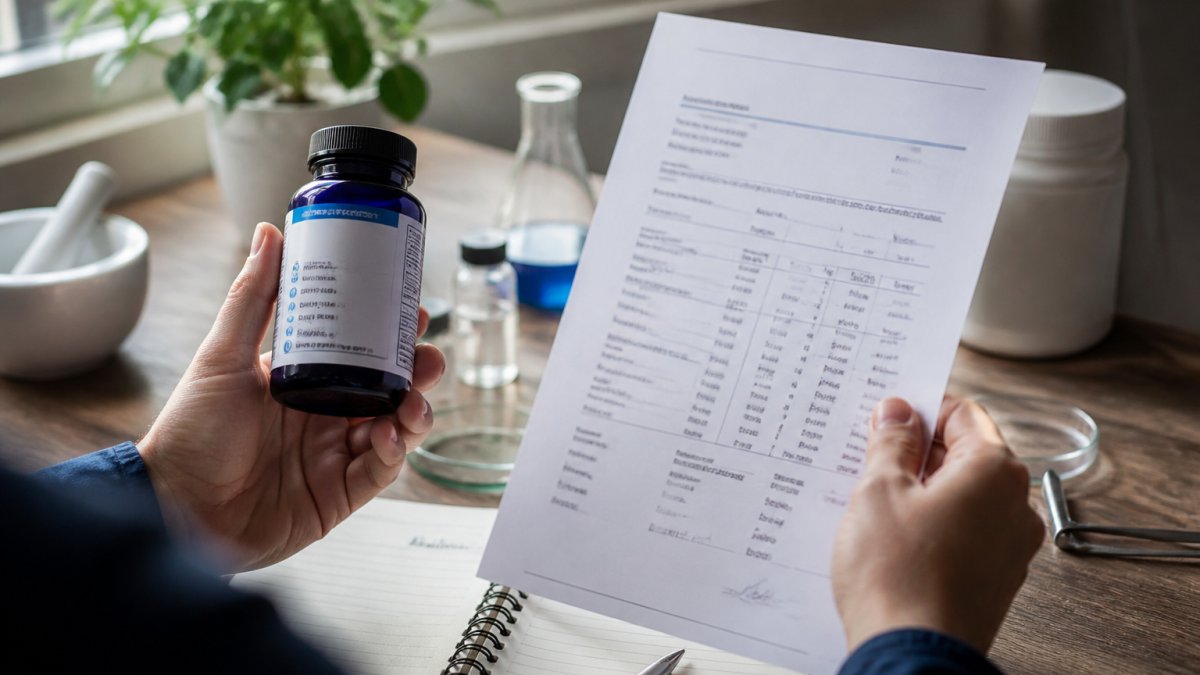
When you request or review a CoA, look for these specific details:
- Assay results: Confirms the methylene blue content matches the label claim (typically 95-105% of stated amount)
- Heavy metals testing: Screens for lead, cadmium, arsenic, and mercury at safe levels
- Microbial testing: Verifies absence of harmful bacteria, mold, and pathogens
- Solvent residues: Confirms no toxic solvents remain from manufacturing
- Third-party verification: The test should come from an independent lab, not the manufacturer
A legitimate CoA will show the batch number, test date, and the lab's credentials. If a company can't provide this documentation or claims testing isn't necessary, that's a red flag. Methylene blue without pharmaceutical additives should still undergo rigorous testing for safety and purity.
The CoA also tells you what contaminants are actually present. Some products pass safety thresholds but still contain measurable levels of impurities. A clean formulation will show minimal or undetectable levels across all tested parameters. Compare CoAs from different brands, the differences in heavy metal levels or microbial counts can be substantial.
Methylene Blue Liquid vs. Capsules: Formulation Differences
Liquid methylene blue typically contains fewer inactive ingredients than capsule formulations. A basic liquid might be methylene blue dissolved in purified water or a carrier oil, with perhaps one stabilizer. Capsules, by contrast, require flow agents and binders to hold the powder together and allow machines to fill them accurately.
Absorption rates differ between the two. Liquid formulations bypass the digestive step of breaking down a capsule, potentially offering faster bioavailability. However, the difference is modest, most people absorb capsule-form methylene blue effectively. The real advantage of liquid is simplicity: fewer ingredients means fewer potential sources of contamination or sensitivity.
Dosing precision also varies. Liquid methylene blue allows for flexible dosing (you can take 5mg or 10mg by adjusting the volume), while capsules typically come in fixed doses like 5mg or 10mg per capsule. For someone fine-tuning their dose, liquid offers more control.
Storage and shelf life differ as well. Liquid formulations are more prone to degradation if exposed to light or air, so they require dark glass bottles and careful handling. Capsules in a sealed container tend to be more stable. If you travel frequently or need a product that tolerates less-than-ideal storage conditions, capsules may be more practical.
The "best" form depends on your priorities. If minimizing additives is your primary goal, liquid formulations generally win. If convenience and stability matter more, capsules work fine, just ensure they use minimal inactive ingredients.
Methylene Blue Supplement Safety: Contamination Risks and Drug Interactions
Regulatory status and intended-use distinctions:
Methylene blue occupies an ambiguous regulatory space in the United States. The FDA does not classify methylene blue as a dietary supplement ingredient under the Dietary Supplement Health and Education Act (DSHEA) because it is not a vitamin, mineral, herb, amino acid, or other traditional supplement category. Instead, methylene blue is a synthetic pharmaceutical compound with a long history of medical use (approved as a prescription drug for methemoglobinemia since the 1960s).
This creates three distinct product categories:
Mito Stack – Dietary Supplement for Energy & Cognitive Support →
-
Prescription pharmaceutical methylene blue: Manufactured under FDA oversight as a drug, subject to New Drug Application (NDA) approval, with strict manufacturing standards (Current Good Manufacturing Practice, or cGMP, for pharmaceuticals). Examples include methylene blue for treating methemoglobinemia or urinary tract infections. These products are not sold over-the-counter for cognitive or wellness purposes.
-
Over-the-counter methylene blue marketed as a dietary supplement: Sold under the assumption that methylene blue qualifies as a "dietary ingredient" under DSHEA, even though this classification is legally contested. These products are manufactured under dietary supplement cGMP standards (less stringent than pharmaceutical cGMP) and do not require FDA pre-approval before sale. The manufacturer bears responsibility for safety and efficacy claims; the FDA can only intervene after a product is on the market if it is deemed unsafe or if claims are deemed drug claims.
-
Methylene blue labeled "for laboratory use only" or "not for human consumption": Sold as a research chemical or industrial compound, explicitly exempt from FDA oversight. These products are manufactured under minimal quality standards and should never be consumed as a supplement, regardless of purity claims.
Products claiming "methylene blue without pharmaceutical additives" are typically category 2 (dietary supplement), not category 1 (prescription drug). This distinction matters because:
- Manufacturing standards differ: Pharmaceutical-grade methylene blue is manufactured under stricter FDA oversight than supplement-grade methylene blue. Both can be pure, but pharmaceutical manufacturing involves more frequent audits and tighter process controls.
- Labeling claims are restricted: Prescription drugs must list all inactive ingredients and provide a detailed safety label. Dietary supplements have fewer labeling requirements and can make broader health claims (though not disease claims).
- Liability and recalls differ: If a pharmaceutical product causes harm, the manufacturer and FDA have clear legal pathways for recall and compensation. If a supplement causes harm, the burden of proof falls on the consumer to prove causation, and recalls are voluntary unless the FDA can prove the product is unsafe.
- "Without pharmaceutical additives" is marketing language, not a regulatory claim: The term implies the product avoids unnecessary fillers, but it does not mean the product meets pharmaceutical manufacturing standards. A supplement can be "without pharmaceutical additives" and still be manufactured under dietary supplement (not pharmaceutical) cGMP standards.
Contamination risks:
The primary safety concern is purchasing a product contaminated with heavy metals or pathogens due to poor manufacturing or sourcing from industrial-grade suppliers. Contamination can occur at multiple points: during synthesis, during packaging, or from storage conditions.
Common contaminants in methylene blue products include:
- Lead: Accumulates in bone and soft tissue over time; chronic exposure is linked to cognitive decline, hypertension, and kidney damage. Safe levels in dietary supplements are typically <0.1 ppm (parts per million), though no federal limit is formally set for supplements.
- Cadmium: A known carcinogen that accumulates in kidneys and liver. Safe levels are typically <0.05 ppm.
- Arsenic: Associated with cancer risk and cardiovascular disease at chronic low doses. Safe levels are typically <0.1 ppm.
- Mercury: Neurotoxic; accumulates in the brain and kidneys. Safe levels are typically <0.01 ppm.
- Bacterial endotoxins: Lipopolysaccharides from gram-negative bacteria that trigger inflammatory responses even if the bacteria are killed during processing. Products manufactured under poor sanitation may contain endotoxins even if microbial counts are low.
Products manufactured without rigorous quality control may contain these contaminants at levels that accumulate in your body over time. This is why third-party testing and a documented Certificate of Analysis (CoA) are non-negotiable. A CoA should show heavy metals testing at detection limits of ≤0.1 ppm for lead, cadmium, and arsenic, and ≤0.01 ppm for mercury.
Drug interactions and contraindications:
Methylene blue is generally well-tolerated, but several drug interactions and contraindications warrant careful attention:
-
Serotonergic medications (SSRIs, SNRIs, MAOIs, tramadol): Methylene blue has weak monoamine oxidase inhibitor (MAOI) activity and can increase serotonin levels. Combining it with sertraline, fluoxetine, paroxetine, venlafaxine, tramadol, or other serotonergic drugs theoretically increases the risk of serotonin syndrome (agitation, confusion, rapid heart rate, high blood pressure, muscle rigidity). Serious interactions are rare at typical supplement doses (5-10 mg), but the risk is not zero. Consult your healthcare provider before combining methylene blue with any serotonergic medication.
-
Anticoagulants (warfarin, apixaban, rivaroxaban): Methylene blue may have mild anticoagulant properties, and combining it with blood thinners requires medical oversight. The interaction is not well-characterized in humans, but case reports suggest increased bleeding risk.
-
G6PD deficiency: Glucose-6-phosphate dehydrogenase (G6PD) deficiency is a genetic condition affecting red blood cell metabolism, most common in people of African, Mediterranean, and Asian descent (affects approximately 400 million people worldwide). Methylene blue can trigger hemolytic anemia in this population by oxidizing hemoglobin. People with G6PD deficiency should avoid methylene blue entirely.
-
Pregnancy and breastfeeding: Data on methylene blue safety during pregnancy and lactation is limited. Most supplement companies recommend avoiding methylene blue during these periods due to insufficient safety data, even though the compound has been used in medical settings (e.g., for treating methemoglobinemia in newborns) for over a century. Consult your obstetrician before use.
-
Photosensitivity: Methylene blue can increase photosensitivity in some individuals. If you are taking photosensitizing medications (e.g., tetracycline antibiotics, thiazide diuretics, NSAIDs) or have a history of photosensitivity, use sunscreen and limit sun exposure.
Key Takeaway
The safest approach is to (1) verify your methylene blue product has a current third-party CoA showing undetectable or minimal heavy metals and microbial contamination, (2) understand that "without pharmaceutical additives" is a marketing claim about formulation simplicity, not a regulatory designation, (3) discuss any new supplement with your healthcare provider if you are on medications or have existing health conditions, and (4) recognize that dietary supplement methylene blue is not FDA-approved for any health claim and that you bear the responsibility for evaluating safety and efficacy.
Choosing a Clean Methylene Blue Product: What to Check Before You Buy
Start by examining the ingredient list. Count the inactive ingredients, fewer is better. A truly clean product will list methylene blue first, followed by one or two essential carriers or stabilizers. If the label reads like a chemistry experiment with 10+ ingredients, it's not a clean formulation.
Verify the grade and source of the methylene blue itself. The label or website should explicitly state "USP-grade" or "pharmaceutical-grade." If it doesn't specify, assume it's a lower grade. Ask the company directly if they won't say, a transparent manufacturer will answer immediately.
Request a current certificate of analysis. Don't accept "we test our products" as a substitute for actual documentation. A CoA should be dated within the last year and show results for heavy metals, microbial contamination, and potency. Compare CoAs from different brands; you'll often see meaningful differences in contaminant levels.
Check for third-party certifications. Some products carry NSF Certified for Sport, USP Verified, or ConsumerLab seals. These indicate independent verification of label claims and contamination screening. While not mandatory, they're a strong signal of quality commitment.
Read customer feedback carefully, but recognize that individual experiences vary widely. Some people feel cognitive effects within hours; others notice nothing. This doesn't necessarily reflect product quality, individual metabolism and baseline health status matter enormously. Focus instead on whether customers report consistency across batches and whether the company responds professionally to quality concerns.
| Criterion | What to Look For | Red Flag |
|---|---|---|
| Inactive Ingredients | 1-2 stabilizers or carriers | 5+ fillers, colorants, or sweeteners |
| Methylene Blue Grade | USP or pharmaceutical-grade explicitly stated | No grade specified or "laboratory-grade" |
| Certificate of Analysis | Current (within 1 year), shows heavy metals and microbial testing | Unavailable or dated beyond 1 year |
| Heavy Metals Testing | Undetectable or minimal levels | No testing data provided |
| Company Transparency | Clear answers about sourcing and testing | Evasive responses or marketing-only claims |
Mito Stack's approach to methylene blue without additives includes pharmaceutical-grade sourcing, third-party testing, and minimal inactive ingredients. Its formulation combines methylene blue with NMN, resveratrol, pterostilbene, and CoQ10 to support mitochondrial function and NAD+ production, a synergistic blend designed for sustained cognitive clarity and cellular energy.
When you're selecting a methylene blue product, remember that "clean" means both what's in the bottle and what isn't. The absence of unnecessary additives combined with rigorous testing for contaminants defines a truly safe, effective supplement. Take time to verify these details before committing to a new product.
Choosing methylene blue without pharmaceutical additives means prioritizing purity, transparency, and third-party verification over marketing claims. At Mito Stack, we've built our methylene blue formulation on these principles, pharmaceutical-grade sourcing, comprehensive testing, and minimal inactive ingredients. When you're ready to support your cognitive performance and cellular energy with a clean, evidence-backed supplement, Mito Stack delivers quality.
Frequently Asked Questions
What does 'without pharmaceutical additives' mean on a methylene blue product label?
It means the product contains the active methylene blue molecule without common pharmaceutical fillers like microcrystalline cellulose, magnesium stearate, or silicon dioxide. However, some 'clean' formulations still contain excipients like vitamin C for stability or glycerin in liquid forms. True additive-free methylene blue is rare; what matters is that inactive ingredients are minimal, disclosed, and safe for human consumption rather than industrial-grade contaminants.
Is USP-grade methylene blue the same as pharmaceutical-grade methylene blue?
USP-grade means the product meets United States Pharmacopeia standards for purity, potency, and manufacturing. Pharmaceutical-grade is a broader term indicating suitability for human use but doesn't specify a formal standard. USP-grade is more rigorous and verifiable. When you see USP on a methylene blue label, it means third-party testing confirmed the product meets strict purity and contaminant limits, making it safer than industrial-grade alternatives.
Can methylene blue be taken safely every day?
Methylene blue can be taken daily in appropriate doses, typically 1-2 mg per kilogram of body weight, though individual tolerance varies. Daily use is safe when the product is pharmaceutical-grade or USP-grade and free from heavy metals and contaminants. However, long-term daily use should be discussed with a healthcare provider, especially if you're on medications, pregnant, or have specific health conditions. Quality matters more than frequency; a clean product used daily is safer than an impure one used occasionally.
What contamination risks should I look for when choosing a methylene blue supplement?
Industrial-grade and laboratory-grade methylene blue can contain heavy metals like lead, cadmium, and arsenic, as well as formaldehyde and other solvents used in manufacturing. A certificate of analysis from an independent third-party lab should confirm the absence of these contaminants. Ask suppliers for batch-specific testing results, not generic statements. Pharmaceutical-grade or USP-grade products are tested for these risks, but always verify with documentation rather than trusting marketing claims alone.